
WHAT HAS CIVIL LITIGATION BRIEF EVER DONE FOR US? WITNESS STATEMENTS IN THE BUSINESS AND PROPERTY COURTS: TEN KEY POINTS
Here we are looking at the posts on witness statements, more particularly those arising from PD57AC. It says a lot that in 2024 the courts were dealing with a submission that these rules were “more honoured in the breach than the observance”.
“There is far too much lip service paid to PD57AC by those preparing and certifying witness statements.”
HHJ Pearce, sitting as a Judge of the High Court, in KSY Juice Blends UK Ltd v Citrosuco GmbH [2024] EWHC 2098 (Comm).
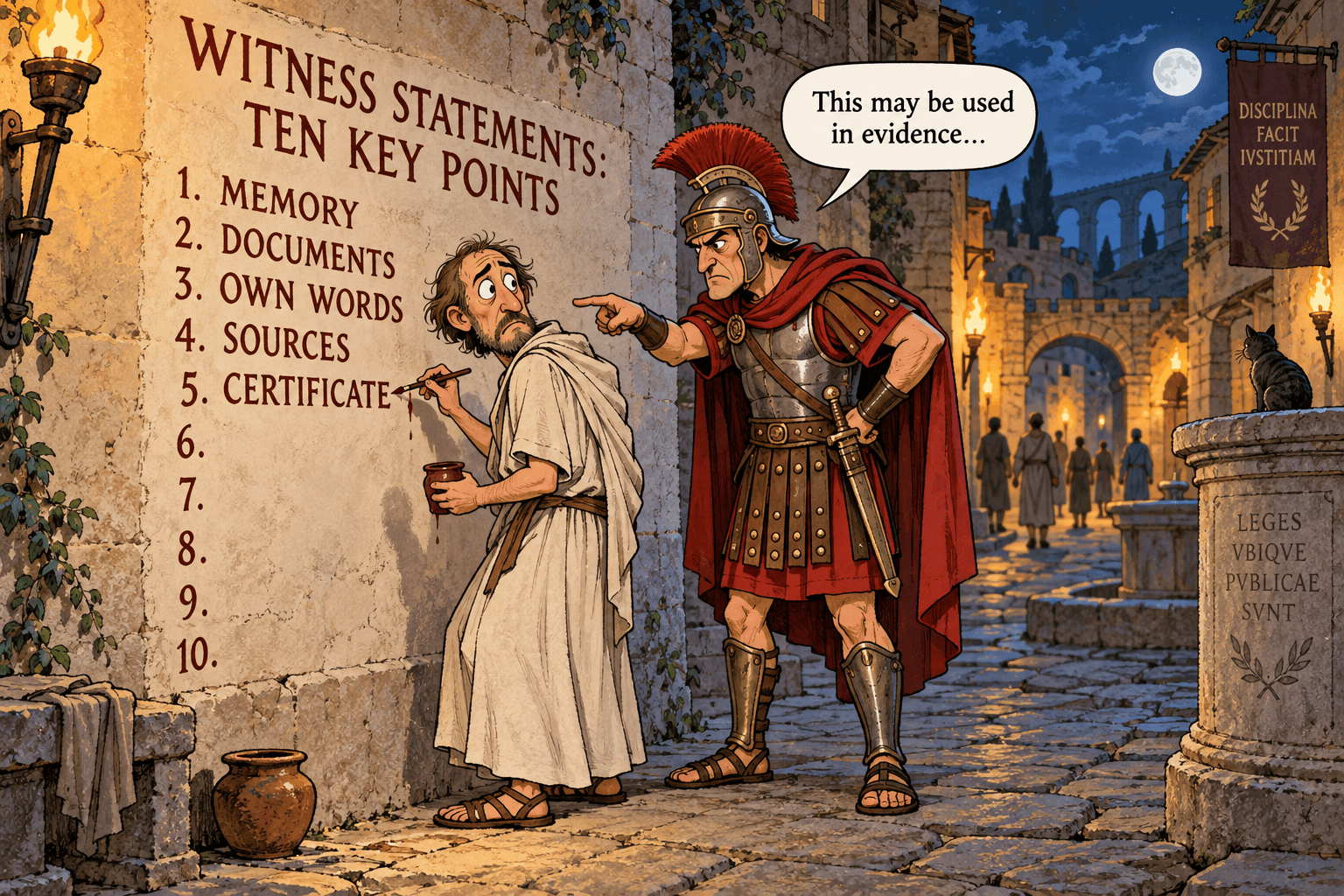
KEY PRACTICE POINTS
The simple guidance is follow the rules. The reality appears to be that many people do not. Whether this is through ignorance or a deliberate strategic decision is not clear. In any event non-compliance can be expensive and counter-productive.
1. START WITH THE PURPOSE OF A WITNESS STATEMENT
A trial witness statement exists to set out the evidence that the witness would give orally if called to give evidence-in-chief. It is not a pleading, skeleton argument, closing submission or opportunity to provide a commentary on the entire history of the dispute.
That sounds elementary. The steady flow of reported cases suggests otherwise.
The basic question should always be:
Is this evidence that this witness could properly give from the witness box?
If the answer is “no”, it probably should not be in the statement.
RELATED POSTS
- COMMERCIAL LITIGATORS ON THE NAUGHTY STEP 3: WHY PD57AC WAS INTRODUCED: “THE PROPER AND SENSIBLE SCOPE OF EVIDENCE-IN-CHIEF IS NO LONGER THE STOCK-IN-TRADE KNOWLEDGE OF THOSE RESPONSIBLE FOR PROOFING WITNESSES…”
- WITNESS EVIDENCE WEDNESDAY: THE COMMERCIAL COURT REPORT AND WITNESS STATEMENTS: PD57AC WAS FIVE YEARS OLD THIS MONTH – STILL GUIDANCE IS NEEDED
2. THE STATEMENT MUST CONTAIN THE WITNESS’S OWN EVIDENCE
The evidence must be given in the witness’s own words. Lawyers can assist with structure and clarity, but they must not manufacture a polished corporate narrative which bears little resemblance to the witness’s actual recollection or vocabulary.
Uniform statements, identical passages and legalistic expressions may indicate that the lawyer’s voice has replaced that of the witness. This does not merely create a technical breach. It may cause the judge to doubt the reliability of the evidence itself.
RELATED POSTS
- PRISING LAWYERS AWAY FROM THEIR COMFORT BLANKET WHEN DRAFTING WITNESS STATEMENTS: A DETAILED CONSIDERATION OF THE REQUIREMENTS FOR WITNESS STATEMENTS AND PD57AC
- A CLEAR WARNING FOR THOSE WHO SIGN WITNESS STATEMENTS AND SOLICITORS WHO SIGN STATEMENTS OF COMPLIANCE: IT IS NOT A JUNGLE OUT THERE
3. A WITNESS CANNOT GIVE EVIDENCE ABOUT THINGS THEY DO NOT KNOW
The statement must distinguish between matters within the witness’s personal knowledge and information obtained from elsewhere.
A witness should not speculate about:
- what another person thought or intended;
- why another person acted in a particular way;
- events at meetings they did not attend;
- the contents of conversations they did not hear; or
- matters pieced together by the legal team from the documents.
A senior position in a company does not confer personal knowledge of everything that happened within it.
RELATED POSTS
- COMMERCIAL LITIGATORS ON THE NAUGHTY STEP 2: NON-COMPLIANCE WITH PD57AC: “HE KNOWS NOT OF WHAT HE SPEAKS”
- WHEN A LAWYER MAKES A WITNESS STATEMENT FOR THEIR CLIENT: THEY MAY BELIEVE IT TO BE TRUE, BUT IT IS A VERY DIFFERENT MATTER TO PROVIDING EVIDENCE FROM SOMEONE WITH DIRECT RELEVANT KNOWLEDGE
4. DO NOT TURN THE STATEMENT INTO A TOUR OF THE DOCUMENTS
One of the habits PD57AC was designed to address was the practice of taking a witness through the disclosure and asking them to provide a running commentary upon it.
The fact that a document exists is usually proved by the document itself. The witness should address it only where they have relevant personal evidence to give about its creation, receipt, meaning or context.
The statement should not quote lengthy extracts from documents or rehearse a chronology which anyone could construct from the bundle.
RELATED POSTS
- COMMERCIAL LITIGATORS ON THE NAUGHTY STEP 5: PD57AC AND REFERENCE TO DOCUMENTS: WHY LAWYERS NEED TO BE PRISED AWAY FROM THEIR COMFORT BLANKETS
- PRISING LAWYERS AWAY FROM THEIR COMFORT BLANKET WHEN DRAFTING WITNESS STATEMENTS: A DETAILED CONSIDERATION OF THE REQUIREMENTS FOR WITNESS STATEMENTS AND PD57AC
5. IDENTIFY THE DOCUMENTS USED TO REFRESH THE WITNESS’S MEMORY
PD57AC requires the statement to identify documents which the witness has referred to, or been referred to, for the purpose of providing the evidence.
This is important because memory is not a fixed recording. Showing a witness documents may refresh recollection, but it may also influence or reconstruct it.
The list of documents should be prepared carefully and accurately. It should not be treated as a formulaic appendix added at the last minute.
RELATED POSTS
- COMMERCIAL LITIGATORS ON THE NAUGHTY STEP 5: PD57AC AND REFERENCE TO DOCUMENTS: WHY LAWYERS NEED TO BE PRISED AWAY FROM THEIR COMFORT BLANKETS
- WITNESS STATEMENTS: PD57AC “MORE HONOURED IN THE BREACH THAN THE OBSERVANCE”: AND THIS HAS CONSEQUENCES
6. ARGUMENT BELONGS IN THE SKELETON ARGUMENT
A witness is there to give evidence, not to argue the case.
Expressions such as “plainly”, “clearly”, “it follows that” and “the only reasonable conclusion” are often warning signs. So are passages construing contracts, commenting on the law or explaining why the opposing case must fail.
Putting argument into a witness statement rarely strengthens a party’s case. It may obscure the useful evidence, expose the witness to unnecessary cross-examination and reduce the weight given to the statement.
RELATED POSTS
- “ARGUMENT SHOULD BE LEFT TO THE SKELETON ARGUMENTS”: GUIDANCE ON WITNESS STATEMENTS IN THE COMMERCIAL COURT REPORT
- STATEMENTS OF OPINION AND COMMENT WILL BE REDACTED: WITNESS STATEMENTS IN THE BUSINESS AND PROPERTY COURTS: THE NEW RULES CONSIDERED
7. THE CERTIFICATE OF COMPLIANCE IS A SERIOUS PROFESSIONAL CERTIFICATION
The legal representative’s certificate is not a piece of administrative boilerplate.
The solicitor is certifying that the requirements of PD57AC and the Statement of Best Practice have been explained to the witness and that the statement has been prepared in accordance with them.
A lawyer should not sign simply because the certificate is required or because the client is pressing for the statement to remain in its existing form. If the statement is not compliant, the answer is to revise it—not to certify it regardless.
RELATED POSTS
- COMMERCIAL LITIGATORS ON THE NAUGHTY STEP 4: WHY IS PD57AC BREACHED SO OFTEN? “SOLICITORS MIGHT FEEL UNDER PRESSURE TO SIGN CERTIFICATES OF COMPLIANCE … EVEN WHEN THEY KNOW THAT STATEMENTS WERE NOT COMPLIANT…”
- NON-COMPLIANT WITNESS STATEMENTS (AGAIN): THE SOLICITOR’S STATEMENT OF COMPLIANCE WAS “FALSE”
8. NON-COMPLIANCE CAN DAMAGE THE EVIDENCE EVEN IF NOTHING IS STRUCK OUT
The danger is not confined to a formal application.
A judge may decide to ignore inadmissible or argumentative passages. More importantly, non-compliance may substantially reduce the weight attached to the statement. A party can therefore reach trial with its evidence formally intact but practically weakened.
A strategy of recognising the defect and deciding to “wait and see” is dangerous. The problem may emerge during cross-examination or in the judgment, when it is too late to repair it.
RELATED POSTS
- WITNESS STATEMENTS: ANOTHER FAILURE TO COMPLY WITH PD57AC: A “WAIT AND SEE” STRATEGY MAY BE DANGEROUS: NON-COMPLIANCE GREATLY REDUCES THE WEIGHT OF THE STATEMENTS
- WITNESS EVIDENCE WEDNESDAY: COMMERCIAL LITIGATORS ON THE NAUGHTY STEP AGAIN: YOUR STATEMENTS DID NOT COMPLY WITH PD57AC SO WE ARE JUST GOING TO IGNORE THE ERRANT PARTS
9. THE COURT CAN STRIKE OUT THE OFFENDING MATERIAL—AND MAKE A COSTS ORDER
The available sanctions include striking out all or part of a statement, requiring it to be redrafted, withdrawing permission to rely upon it, ordering evidence-in-chief to be given orally and making an adverse costs order.
A party may also be prevented from recovering the costs of preparing the defective evidence or the costs of putting it right. The costs of producing a non-compliant statement are not necessarily recoverable costs of the litigation.
RELATED POSTS
- WITNESS EVIDENCE WEDNESDAY: COURT STRIKES OUT PARTS OF DEFENDANT’S WITNESS STATEMENT AS NON-COMPLIANT WITH PD57AC
- WITNESS EVIDENCE WEDNESDAY 2: WHAT HAPPENED TO COSTS WHEN PARTS OF THE DEFENDANT’S STATEMENT WERE STRUCK OUT?
- YOU ARE NOT GOING TO GET PAID FOR RECTIFYING YOUR OWN DEFECTIVE WITNESS STATEMENTS: WHY NON-COMPLIANCE WITH PD57AC CAN BE EXPENSIVE
10. PD57AC IS NOT A WEAPON FOR PROCEDURAL WARFARE
There is an important balance.
Serious breaches should be identified promptly and, where possible, raised with the opposing party so that they can be corrected. However, the Practice Direction should not be used to mount disproportionate applications directed at isolated words or minor imperfections.
The court is unlikely to welcome a vast schedule cataloguing every arguable infringement. The objection should identify the particular passage, explain the particular breach and state what proportionate remedy is sought.
Those who use PD57AC to “batter the opposition” may find that the application causes more damage to them than to their opponent.
RELATED POSTS
- THE RULES ABOUT WITNESS STATEMENTS “SHOULD NOT BE USED AS A WEAPON FOR THE PURPOSE OF BATTERING THE OPPOSITION”: COMMONSENSE MUST BE USED
- THE PRACTICE DIRECTION SHOULD NOT BE TAKEN AS A WEAPON IN WHICH TO FILLET TWO OR THREE WORDS FROM A WITNESS STATEMENT
- COST BITES 17: FAILURE TO ENGAGE WITH CRITICISM OF WITNESS STATEMENT LEADS TO INDEMNITY COSTS
OVERVIEW: JUST KEEP IT SIMPLE…
A compliant trial witness statement should contain:
- Relevant factual evidence.
- Within the witness’s personal knowledge.
- Expressed in the witness’s own words.
- Limited to what the witness could properly say in evidence-in-chief.
- An accurate account of how well the witness remembers the relevant events.
- A proper identification of documents used to refresh or assist recollection.
It should not contain:
- Legal argument.
- Submissions on the merits.
- Speculation about the knowledge or motives of others.
- Lengthy quotations from documents.
- A lawyer-created narrative masquerading as the witness’s recollection.
The essential task is not to produce the most impressive statement. It is to preserve and present the witness’s actual evidence.


You must be logged in to post a comment.