
IF YOU CAN’T PROVE IT THEN YOU DON’T GET IT: LIFE IS REALLY THAT SIMPLE: WEBINAR ON PROVING DAMAGES: 22nd OCTOBER 2026
We have looked many times on this blog at cases where litigants have simply failed to prove things. There have been numerous occasions when this relates to a failure to prove damages. This webinar looks at how litigators can avoid this problem in the context of personal injury claims. Booking details are available here.
“It is a fundamental principle of litigation that a claimant must prove their loss.In order to do so, they need to establish that they have, in fact, sustained recoverable damage. They must also satisfy the Court as to the amount of any loss which they have suffered.”
(Notus Group Ltd v British Engineering Services Holdco Ltd [2025] EWHC 1391 (Comm)).
Overview
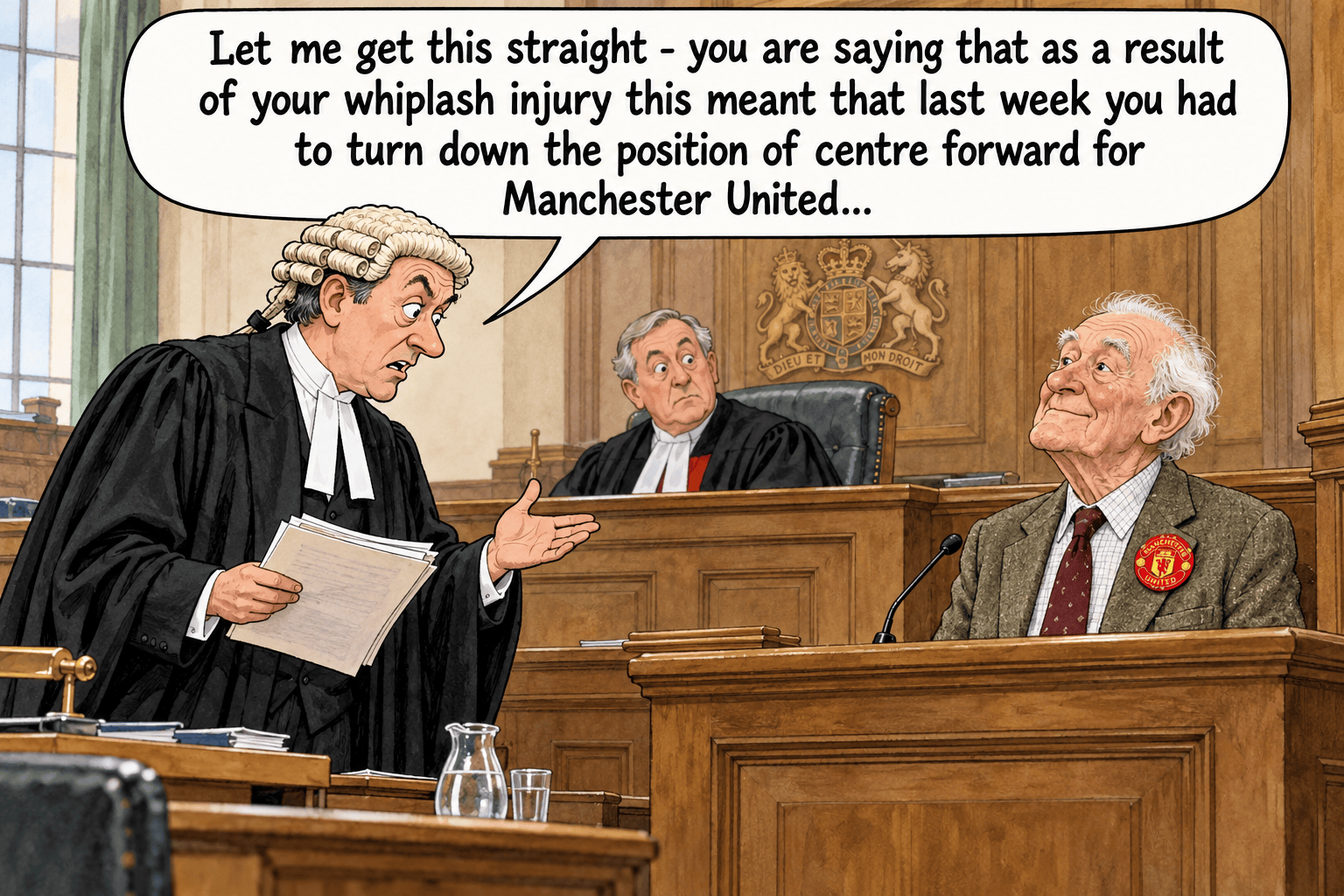
This webinar provides a practical examination of one of the most critical aspects of personal injury litigation: proving damages at trial. However well-founded a claim may be in principle, it will fail if the claimant cannot establish the losses claimed with proper evidence.
Focusing on real-world examples and recent case law, the session explores situations where claimants have failed to prove damages—or key heads of loss—and the consequences that follow. It highlights the evidential challenges practitioners face and the steps that must be taken throughout the life of a case to ensure that claims are properly supported at trial.
The webinar also addresses the strategic risks involved in pleading damages. It considers the dangers of both underpleading and overpleading a case, including the potential for adverse findings such as fundamental dishonesty where claims are exaggerated or unsupported.
Overall, the session equips practitioners with a practical framework for identifying evidential gaps, managing risk, and ensuring that damages are properly and credibly established before the court.
Learning Objectives
By the end of this webinar, participants will be able to:
- Understand the evidential requirements for proving damages at trial
- Identify common reasons why claims for damages fail
- Apply practical strategies to ensure losses are properly evidenced
- Recognise what steps to take where a loss cannot be fully proven
- Assess the risks associated with underpleading a claim
- Evaluate the dangers of overpleading, including allegations of fundamental dishonesty
- Identify evidential gaps and take steps to address them before trial
- Develop a structured approach to preparing and presenting damages claims
RELATED POSTS
| Post | Date | Brief summary |
|---|---|---|
| Proving Things 242: The claimant who was given a second chance to prove his damages claim | 12 September 2024 | Discusses Allard v Govia Thameslink Railway Ltd [2024] EWHC 2227 (KB) and difficulties with proof of the claimant’s damages. An important qualification: this concerns a claimant who was given a further opportunity to establish his claim, rather than a final rejection of all damages. Civil Litigation Brief ® |
| Proving Things 229: Claimant fails to prove certain heads of damages: decision upheld on appeal | 30 June 2023 | Lal v Reeder [2023] EWHC 1437 (KB). The trial judge rejected particular heads of damage because the claimant had failed to establish them by evidence. That decision was upheld on appeal. A particularly direct example of the need to prove each claimed loss. Civil Litigation Brief |
| Fundamental dishonesty: where 3% of the claimed damages are awarded the whole claim is definitely tainted | 24 October 2022 | Muyepa v Ministry of Defence [2022] EWHC 2648 (KB). Examines the enormous disparity between the damages claimed and those supported by the court’s findings, and the dismissal of the claim for fundamental dishonesty. Relevant to unsupported or exaggerated quantum claims, although it goes beyond a simple evidential failure. Civil Litigation Brief ® |
| The need for a claimant to prove injury: without evidence the action should not have been brought | 22 November 2021 | Discusses Kavak v FMC, Manchester County Court, 24 April 2018. Illustrates the fundamental requirement to prove injury: establishing an accident or breach of duty cannot replace evidence of compensable damage. Civil Litigation Brief |
| Proving Things 168: Proving loss of earnings: Court of Appeal decision: statements of opinion or belief carry no weight | 6 November 2019 | Irani v Duchon [2019] EWCA Civ 1846. Addresses failure to establish matters supporting a loss of earnings claim. Highlights the distinction between factual evidence and a claimant’s opinion or belief about future employment prospects. Civil Litigation Brief ® |
| Proving Things 121: Failing to prove loss of earnings, and the appropriate approach where future treatment is uncertain | 26 July 2018 | Welsh v Walsall Healthcare NHS Trust [2018] EWHC 1917 (QB). Considers failure to prove loss of earnings in a clinical negligence claim, alongside the assessment of damages where future treatment remains uncertain. Civil Litigation Brief |
| Proving Things 89: An approach that is just dangerous: abdication of the lawyer’s role to an expert | 16 April 2018 | Wright v Satellite Information Services Ltd [2018] EWHC 812 (QB). Examines the danger of advancing a damages claim without adequate supporting evidence and leaving its formulation to an expert. Particularly relevant to the unsuccessful future care claim. Civil Litigation Brief ® |
| Defendant fails to obtain finding of fundamental dishonesty: defendant’s appeal dismissed: a badly thought out and poorly drafted schedule | 16 April 2018 | Another post on Wright. The claimant’s future care claim was not established, but that failure did not require a finding of fundamental dishonesty. Useful on the distinction between an inadequately supported head of loss and a dishonest claim. Civil Litigation Brief ® |
| “Good days and bad days”: the role of video evidence in the assessment of credibility and damages | 2 May 2017 | Karapetianas v Kent and Sussex Loft Conversions Ltd [2017] EWHC 859 (QB). Considers assessment of damages where video evidence contradicted the claimant’s account of continuing symptoms. Relevant to failure to establish the extent and duration of disability claimed. |


You must be logged in to post a comment.